
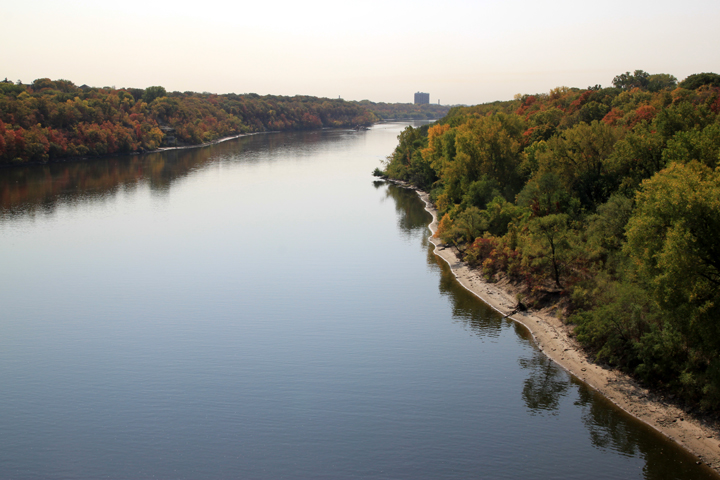
Mississippi River from the Lake Street Bridge.
Spend a few minutes on West River Parkway on a beautiful day like today and you will see bikers, walkers, runners exercising and improving their health. But what about the river they exercise alongside? Is the Mississippi healthy? Would you walk down the street and go for a swim in the Mississippi? Or perhaps head down to the river banks in Longfelllow to fish for your dinner?
Last night at the Science Museum of Minnesota, the Friends of the Mississippi River and the National Park Service presented answers to these questions and others in the release of its extensive first-ever State of the River Report: Water Quality and River Health in the Metro Mississippi River.
The heavily-researched report determined 13 key indicators for the river’s health under the general topics of river flow, swimming and recreation, fish and fishing, ecological health, and other contaminants.
Top Concerns for the River’s Health
In general, the river is much cleaner than it was prior to the passing of the Clean Water Act that was enacted in 1972, however the Mississippi still has issues. Trevor Russel, co-author of the report, noted four key concerns:
- Nitrate concentrations increased by 47% from 1976-2005.
- River flow (a critical component in determining the health of the river) has increased due to increased intensity of storms, intensive farming practices, and urban runoff.
- Asian carp populations are increasing, and as the bullies of the river, threaten native species. They have no natural predators and large appetites. Silver carp, found throughout the Mississippi waterways (from Coon Rapids Dam to Hastings Dam), can jump 10 feet, injuring boats and boaters. Check out YouTube for some crazy videos of the silver carp in action.
- Triclosan, an antimicrobial found in hand soap, creates dioxins. These dioxin levels have increased by 200-300%. The larger environmental impact is unknown, however this contaminate can increase bacterial resistance, is shown to be an endocrine disrupter in animals, and can lead to allergy susceptibility in humans.
The Good News
Despite the negative findings, improvements have been made:
- Bald eagles are rebounding due to healthier aquatic prey. We’ve noticed several eagles hunting on the river in Longfellow. Also good news, the eagles have lower levels of contaminates (lead, mercury, pesticide DDT, PCBs, and PFCs) than they have in the past.
- Mussels, which are very sensitive to pollution, are also returning in large numbers to the metro river area.
- Fish populations are returning as well. From only two fish in the St. Anthony Falls area in 1926 to more than 127 species today, they have definitely made a come back.
What about Swimming and Fishing?
So, should you swim in the river? Probably not in our neighborhood. The water has unsafe levels of bacteria (e. coli) and from St. Anthony Falls to the Ford Dam. If you decide to take a dip, be sure to rinse off well after swimming and avoid the water completely 48 hours a rainstorm (locally and upstream).
How about fishing for your dinner? The report notes that the fish are safe to eat, with one caveat. Check the location of the fish first. Fish from certain locations have been found to have higher levels of mercury, PCB, and PFOS. Check with the Minnesota Department of Health’s guidelines for site specific information on eating different fish species. From the Ford Dam to the Hastings Dam, the MDH recommends eating bluegill sunfish, carp, channel and flathead catfish, northern pike, white bass, among others at the most of once per week due to high levels of PFOs, PCBs, and mercury contamination in the fish.
How can Longfellow Residents Improve the Health of the River?
Friends of the River provide some guidelines for what we can do to help improve the quality of the river, such as
- use triclosan-free products;
- pick-up after pets;
- plant native species in gardens;
- keep a healthy lawn and pick up leaves, grass, and trash; and
- keep storm drains free of debris.







Great photos of our great river! Wants me to get out and enjoy it on this amazing September day! Loved the story about the health of the river and simple things we can do to continue to improve it’s health — like our own! Thanks for covering the story.
Glad to hear you enjoyed the story.
Thanks for sharing the links to more information and resources. This was extremely beneficial to learn more about the issues and action steps!